free poker Versus Casino Demos: What Your Practice Session Actually Teaches
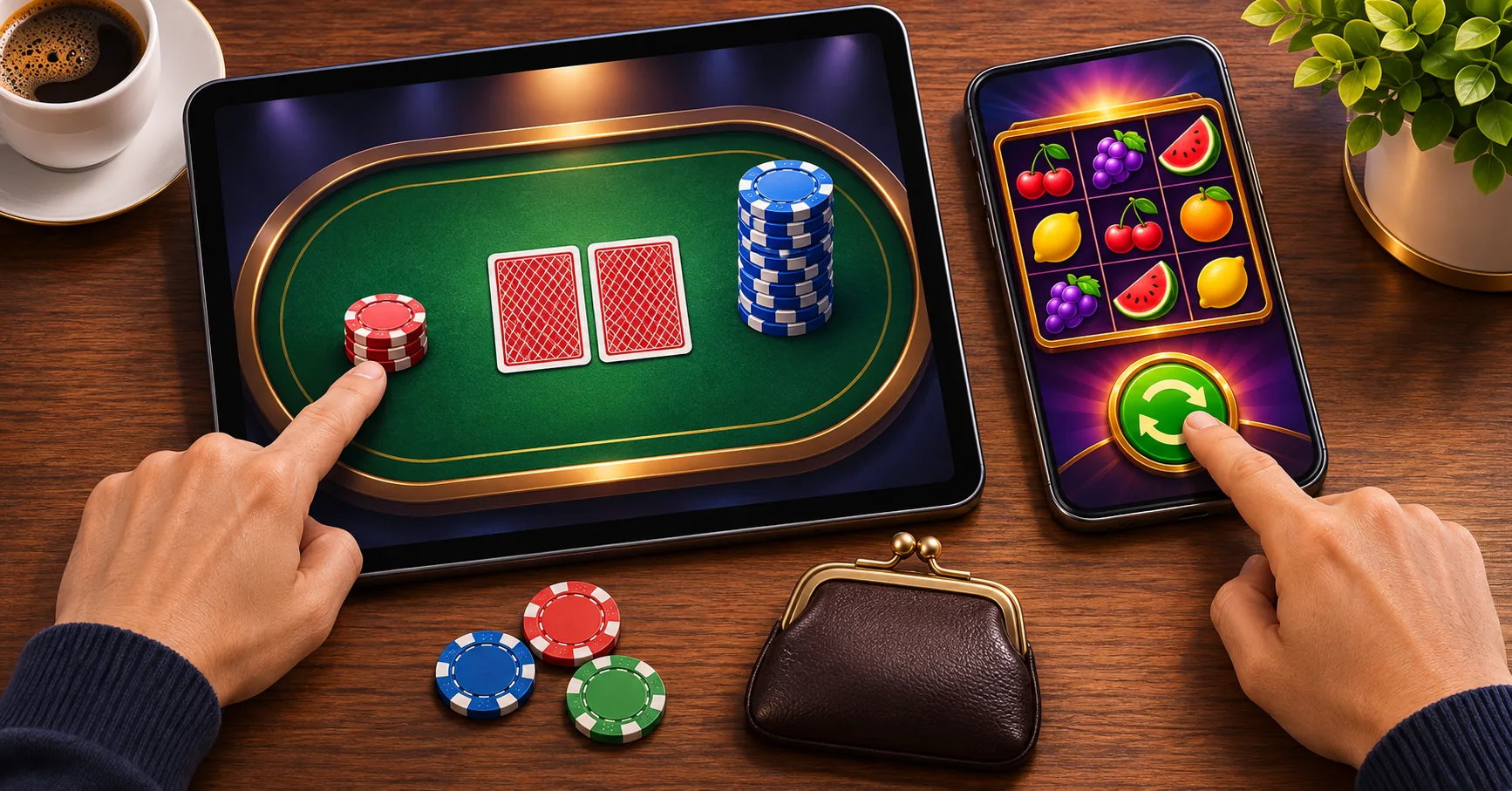
You have 20 minutes before dinner, a phone sharing the household Wi-Fi, and PHP 500 that already has another purpose. Free poker looks like an easy way to play without touching that money. The useful comparison, however, goes beyond whether the opening balance costs anything.
For an experienced Philippine player, the better question is what the session can realistically deliver. Poker can exercise decisions against opponents, while a slot demo mainly teaches controls and game presentation. Baccarat offers a different rhythm again. Your available attention, connection and reason for playing determine which difference matters.
Treat the time and peso amounts here as planning examples. Before opening a table, distinguish reusable play chips from purchased virtual currency, restricted tournament tickets and any balance connected to cash prizes.
Twenty minutes leaves different unfinished business
Imagine opening a game at 7:40 p.m. with a firm stopping point at 8:00 p.m. A poker tournament can outlast that window, even when entry costs nothing. Leaving may surrender your remaining opportunity in the event. A table that permits departure between hands can fit better, although you still need to check its sitting-out rules.
A slot demo usually offers more natural stopping points between completed spins. That changes if you start an automatic sequence or enter an unfinished feature. Live dealer games follow a shared round schedule, so returning to the screen does not necessarily mean returning to your previous decision point.
Use the following hypothetical windows to match the format to the interruption you actually expect:
- For a 10-minute break before collecting food, choose a format you can leave after a completed round without abandoning an ongoing tournament.
- For 20 uninterrupted minutes, a free poker table can support focused observation, provided its entry rules and departure options suit that limit.
- For a possible 45-minute session, check tournament structure before registering; an available time window does not establish how long the event will last.
- If household duties interrupt you every 5 minutes, a manually controlled demo may fit better than poker decisions governed by a countdown.
- If you want only 6 practice hands, choose a session with that endpoint and resist extending it because the last hand felt unsatisfactory.
The distinction is commitment, rather than excitement. A free tournament can demand more continuous attention than a paid single-round game. Zero entry cost removes one expense; it does not remove the cost of leaving dinner, work or another obligation waiting.
Poker practice needs opponents who make folding meaningful
Free poker suits players who enjoy decisions that respond to other people. Position, bet sizing and previous action can matter within the same hand. By comparison, baccarat drawing procedures do not become more flexible because you recognise a pattern in earlier results.
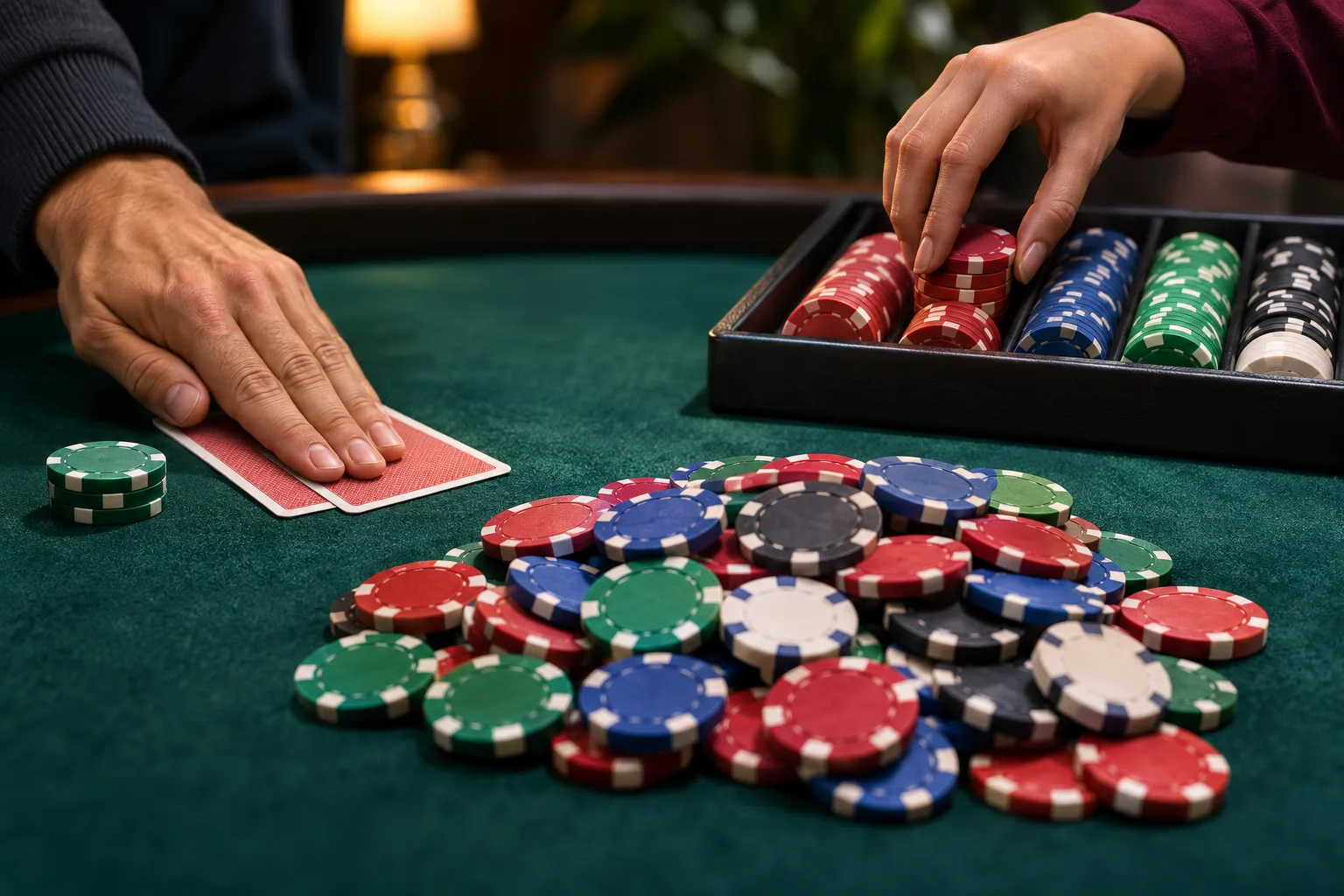
However, play-chip incentives can distort the behaviour you are trying to study. Someone with an easily replenished balance may call a large raise simply to see the cards. A bluff that depends on opponents protecting scarce chips becomes harder to evaluate in that environment.
Consider a hypothetical table where you start with 2,000 chips and the big blind is 20. Your stack represents 100 big blinds. If the big blind becomes 100 while your stack stays unchanged, you have 20 big blinds. Those situations create different decisions despite an identical displayed balance.
This is why a session log should describe the decision rather than celebrate the final chip total. Finishing with 3,000 chips after repeatedly making unsupported calls does not establish that your judgement improved. Equally, losing one well-reasoned hand does not settle whether the decision was poor.
- Record the starting stack in big blinds, such as 100 or 20, so later comparisons reflect decision depth rather than decorative chip totals.
- Choose one question for 12 hands, such as whether position changed your willingness to enter, instead of judging every possible skill simultaneously.
- Mark hands where opponents called unusually large bets, because those responses may limit how well your bluffing observations transfer to another table.
- Review 3 difficult decisions after leaving, separating the information available at the time from the cards revealed after your choice was complete.
- Check whether opponents are people or software before interpreting their behaviour, and read how the game describes matchmaking and practice modes.
For a player who wants strategic feedback, this makes free poker more useful than simply watching outcomes. It also sets a limit: practice is strongest when the exercise matches the behaviour the table actually rewards.
When a casino demo answers the better question
If your question concerns controls, poker may be the wrong practice tool. A player checking how a slot presents its paytable, changes a stake or displays a feature needs that slot's own interface. Another game's free balance cannot answer those questions.
A session in golden empire demo can serve that narrower purpose: inspect the available controls and read the displayed rules before interpreting the animation. Keep the exercise about interface familiarity. A favourable demo result does not establish what a later money session will return.
Free baccarat suits a different objective: following the betting layout and observing how the drawing rules resolve a hand. It offers less room for opponent-dependent decisions than poker. That can appeal when you want a simpler decision structure, though simplicity does not establish a financial advantage.
A comparison with dragon tiger is useful for the same reason. Someone seeking a straightforward card comparison may prefer its basic format over managing a poker hand across several betting rounds. Read the rules for ties and any additional bets separately; visual simplicity can hide materially different settlement conditions.
Try a hypothetical 15-minute comparison with 5 minutes per format. In poker, identify a decision affected by another player's action. In a slot demo, locate the rules and stake controls. In baccarat, follow one complete hand. The useful result is identifying which activity interests you, rather than ranking the balances afterward.
Shared Wi-Fi changes the cost of a missed moment
At home, another person's video call can compete with your session for connection capacity. On mobile data, a change in reception can interrupt play. These situations matter differently when your next action has a deadline.
In poker, a missed decision can trigger whatever timeout action the table uses. Check whether that means checking, folding or sitting out under the relevant conditions. With a live dealer feed, a frozen picture can leave you unsure whether betting remains open. An animation alone cannot settle that question.
For a hypothetical 30-minute session, spend the first 3 minutes checking responsiveness before entering a time-sensitive format. This does not guarantee stability for the remaining 27 minutes. It can still reveal an unsuitable connection before you commit to a tournament.
- Check the poker table's timeout and reconnection rules before joining, especially when a missed action could fold a hand you intended to continue.
- Turn off automatic play where available during connection checks, so a recovered screen does not reveal more completed rounds than you intended.
- After an interruption, inspect the recorded hand or round result before pressing again; repeated taps can make your intended action harder to reconstruct.
- Compare formats under the same connection conditions for a short trial, rather than assuming a simple-looking interface necessarily uses less mobile data.
- If delays recur during a 10-minute test, move the session to a more stable connection or choose an activity without live decision deadlines.
A locally running practice game may tolerate interruption differently from a server-dependent table. Check the actual mode rather than relying on the word free. Connection behaviour belongs to the implementation, not simply to poker, slots or baccarat as categories.
Keep the practice balance separate from the wallet
A chip balance of 10,000 can feel substantial while representing no withdrawable pesos. Conversely, a free-entry event may have eligibility or prize conditions that require careful reading. Neither the balance display nor the entry button establishes the full arrangement.
Before treating a reward as money, check the event rules for redemption, eligibility and any purchase requirement. If the activity leads toward payment, inspect the cashier for supported channels rather than assuming GCash, Maya or a payment centre is available. Confirm the recipient and transaction status before sending anything.
Suppose your hypothetical entertainment allowance is PHP 500, with PHP 150 reserved for mobile data and PHP 350 left uncommitted. Buying PHP 100 of virtual chips leaves PHP 250 uncommitted. Calling the game free does not reverse that purchase or make its chips redeemable.
This distinction helps separate player preferences. Choose free poker when you want decisions against opponents and can accept its practice limitations. Choose a casino demo when you want to understand a particular interface. Choose neither when repeated chip purchases or an unstable connection defeat the reason you started.
End the session by answering one concrete question: did this format provide the experience you wanted within your chosen time and spending boundaries? A larger practice balance is optional. A clear answer is the more useful outcome.